
TVR
  • Home
  • Pages
    • About
    • Help
    • Contact
    • Pricing
    • 5 Book Review Winner Program
  • TVR Reviews
    • Book Ratings
      • 4 Book Rating
      • 3 Book Rating
    • Children's Books
      • Dear Ms. Guadalupe: Letters to My Librarian
      • Milo and the Big Big Feel
    • Fiction
      • Every Delay Means a Life
      • Love at the Eagle
      • The Bloom
      • The Signal Within
      • Twelve Palominos
      • Killer Art
      • Texas Tainted Dreams
      • Roll Back the Sun
      • Pillars of Creation
      • Blind Ambition: Jonathan’s Story
      • The Day They Named It
      • Story Book Mountain
      • Spirit Never Dies
      • God’s Army to Purge Homosexuality
      • Five Years of Cavalryman
      • The Acorn Stories
      • Before We Turn to Dust
      • Searching for a Stranger
      • Because this is Texas
      • Tatae's Promise
      • A Long Way Home
      • The Bone Witcher
      • Camping with a Killer
      • Hallowed Ground
      • BBQ Test: How to be American
    • Non-Fiction
      • Author’s Roadmap to Success
      • The Crazy Great Journey
      • The A to Z Book of Aging
      • Venomous Snakes of Texas
    • Short Story Anthologies
      • Divided We Fall
      • Echoes of Tomorrow
    • Middle School
      • Willowmena
    • YA Fiction
      • Gritty Girl
      • Broke Home, Healed Nest
      • Aspire
1401 Lavaca St, Ste. 1112
Austin, Texas 78701
TrueVoiceReview@outlook.com
True Voice Review
Menu
  1. You are here:  
  2. Home
  3. TVR Reviews
  4. Fiction
  5. Twelve Palominos
  6. Uncategorised

Written by admin on 01 January 2026. Posted in Uncategorised.

Searching for a Stranger

TVR Review Searching for a Stranger - Premium Review


Long Review
Searching for a Stranger by Elaine Kinkead opens with a mood of hard-earned independence and late-blooming hunger for change: Isla Meadows, forty-nine, sick in Rome in late 2019, abruptly realizes she wants a personal reset—and that her long-complicated relationship with her ex-husband (and co-parent) has left her emotionally underfed even when life looks “fine” on paper. From there, the novel builds a contemporary, pandemic-era story about vulnerability—how it can be healing, how it can be exploited, and how easily a person’s longing can be used as leverage.


The core situation is disarmingly modern: an online romance that seems unusually tender, faith-forward, and emotionally intimate slowly reveals itself as something far more dangerous—an impersonation, a con, and a psychological trap. Isla’s “Aach” is skilled at creating the illusion of closeness through ritual (nightly calls, prayers, pet names, romantic language lessons), while gradually steering the relationship toward gifts, money, and urgency. Kinkead gets real mileage from the small behavioral tells of manipulation—how flattery becomes a tool, how “soulmate” language narrows a person’s skepticism, and how shame keeps victims quiet.


One of the book’s strengths is its willingness to inhabit Isla’s interior life without turning her into a stereotype. She’s not written as naïve; she’s written as human—competent in the world, accomplished enough to have built a life, and yet emotionally exposed in the private rooms where loneliness speaks loudest. The pandemic backdrop intensifies that exposure in a way that feels historically specific rather than decorative: family illness, fear, isolation, and the fragile need for hope become emotional accelerants. This is a story that understands why someone can “know better” and still be pulled toward a fantasy that offers relief from dread.


Structurally, Kinkead mixes conventional scenes (conversations with friends, family dynamics, professional encounters) with extended text/message exchanges that recreate the pace and intimacy of online courtship. That form works especially well when the novel shows how a scam is built in layers: charm first, then trust, then moral pressure, then financial extraction. A key conversation with the real Dr. Frager—whose identity is being used—sharpens the book’s theme: the grief of loving someone who “exists,” yet never existed in the way the victim experienced them.


The tone leans toward reflective women’s fiction, but with a clear thread of romantic suspense and psychological drama. The romance is presented as both beautiful and perilous—beautiful because Isla’s desire reawakens, perilous because desire can be engineered. The novel does not shy away from sensuality (often lyrical rather than explicit), and it links physical longing with the desire for spiritual partnership—an especially potent combination when the manipulator performs faith back to the believer. That faith element will land strongly for some readers: it gives Isla’s choices moral gravity and frames betrayal as more than a financial or romantic injury. For others, the overt religious reflection may feel like a dominant flavor.


Prose-wise, the book favors articulate interior monologue, cultural references, and a conversational directness that can be both a strength and a pacing challenge. When it’s working, the voice feels intimate—like being in the room with someone who is thinking out loud and telling the truth as she discovers it. When it slows, it’s usually because the narrative lingers in explanation (especially around the psychology of scams) or circles an emotion readers may already grasp. Still, that same “talking it through” energy is part of the book’s identity: it reads like a lived experience being metabolized in real time, not a sleek plot machine.


Readers who gravitate toward stories of adult reinvention, midlife desire, and emotionally grounded suspense—especially those interested in the mechanics of catfishing/romance fraud—are likely to find Searching for a Stranger absorbing and validating. Readers seeking a fast, twist-heavy thriller may find the opening more meditative than propulsive, but the emotional stakes are clear early: Isla isn’t just chasing a man; she’s trying to reclaim her judgment, dignity, and capacity to trust—without closing herself off to love entirely.


Short Review
Elaine Kinkead’s Searching for a Stranger blends women’s fiction, romantic suspense, and pandemic-era psychological drama into a timely story about online intimacy—and how easily it can be weaponized. Isla Meadows, forty-nine, is emotionally raw after years of complicated partnership dynamics and then the isolating pressures of COVID. Into that vulnerability steps “Aach,” an online romance who seems unusually attentive, faith-centered, and emotionally fluent.


What begins as comforting ritual and flirtation becomes something far darker: a slow-burn impersonation and confidence scam that forces Isla to confront a brutal question—how can love feel real when the person behind it is not who they claim to be? The novel’s most effective passages show manipulation in micro-detail: mirroring, praise, guilt, urgency, and the creeping shift from affection to financial expectation.


Kinkead writes Isla as capable but human, with a vivid interior voice that captures both desire and self-reproach. The book leans reflective, with lyrical sensuality and overt spiritual themes (faith as comfort, faith as vulnerability), and it uses text exchanges and direct conversations—especially with the real person whose identity is stolen—to clarify the emotional devastation of “loving someone who exists, but not as you knew them.” Best for readers who like character-driven suspense rooted in contemporary relationships, midlife reinvention, and the psychological realities of romance fraud—less ideal for readers who want a brisk, action-forward thriller.


One-Sentence Review
A character-driven romantic suspense novel about a midlife woman’s online love story turning into identity theft and emotional warfare—capturing how longing, faith, and loneliness can be expertly exploited.


Book Rating
📘📘📘📘 – Strongly Recommended: A timely, psychologically sharp catfishing/romance-fraud story with a mature heroine and real emotional weight, even if its reflective, talk-it-through pacing won’t suit speed-thriller readers.


Pull Quotes (1–2)

  1. "A smart, emotionally honest look at how longing can be engineered into a trap—and how hard it is to grieve someone who never truly existed."
  2. "Romantic suspense with teeth: intimate, contemporary, and uncomfortably believable in its portrait of manipulation."


Content Notes
• Language: mild (no notable profane intensity observed in sampled sections).
• Violence: none to mild (primarily emotional/psychological harm; no graphic violence observed in sampled sections).
• Sexual Content: present but non-graphic; sensual dialogue and romantic/erotic longing appear on-page.

• Drugs/Alcohol: light (social drinking referenced, e.g., wine/brandy).

• Sensitive Topics: COVID illness/fear, emotional distress, divorce/relationship rupture, financial manipulation/romance fraud themes.


ReadSafe Rating
• Rating: PG-13
• Labels: SC, DA, ST
• Genres: Contemporary Romance; Romantic Suspense; Women’s Fiction (genre labels not explicitly listed in the manuscript front matter—assigned here based on the book’s content and reading experience)
• ISBN: 979-8-9871498-0-5

• Explanation: The book includes on-page sensuality and sexual/romantic longing without explicit detail (SC). Alcohol appears in light, contextual references (DA). Major themes include pandemic-era illness stress, divorce/relationship upheaval, and romance-fraud/identity theft with significant emotional distress (ST).
 

Written by admin on 08 December 2025. Posted in Uncategorised.

The Day They Named It

Long Review
“The Day They Named It” is a contemporary queer political fable that asks what happens when a single, unscripted act of courage reframes a public standoff—and gives a new word to a movement. Set in a near-future or barely alternate present, the story follows Marcus Ibarra, a Black middle-school civics teacher who performs on weekends as drag queen Marsha La Rivera, honoring Stonewall icons Marsha P. Johnson and Sylvia Rivera. When a state legislature pushes a bill aimed at muzzling queer teachers and criminalizing drag around minors, Marcus faces a quiet, wrenching question: show up at the capitol protest as his “safe” daytime self, or as the luminous drag persona who tells his students, implicitly and explicitly, that visibility matters.

The opening section grounds that choice in Marcus’s dual life. Classrooms and club backrooms mirror each other: in one, he carefully modulates tone and content to appease a hostile school board; in the other, Marsha’s sharp humor and unapologetic presence turn a gay bar into a kind of unofficial civics class. The bill crystallizes tensions he has lived with for years—being “too political” by existing—and the decision to attend the protest in full drag comes across not as a stunt but as an act of alignment. The invented word “spirtnece” first appears almost accidentally onstage, when Marsha reaches for “spirit” and instead lands on something denser, meant to capture the gritty, embodied persistence of queer survival.

The heart of the story is the protest sequence on the capitol steps. Riot police advance, counterprotesters shout about “grooming,” and the mood teeters on the edge of the kind of televised clash that will reinforce every narrative the bill’s supporters want. In the middle of that, a chalk circle appears on the stone with SPIRTNECE scrawled inside, and Marsha’s impulsive decision to step into it creates a new center of gravity. The circle becomes a literal and symbolic “spirtnece circle”—a space where, as Marsha defines it, “spirit and actions line up,” and everyone who steps inside is bound to speak without dehumanizing the others. The scene between Marsha and young officer Liam, with his too-big shield and visible hesitation, is the story’s most electric passage, as the drag queen uses wit, moral clarity, and a teacher’s patience to invite the officer to cross the line in a different way than his training assumes.

Characterization is deliberately archetypal. Marcus/Marsha is the charismatic conscience at the center; Liam is the uncertain arm of the state; a trans organizer, a fierce mother of a trans child, and a conflicted pastor round out the initial circle. Each voice introduces a different kind of fear: fear of losing a job, of losing a child, of not living to thirty, of splitting a congregation, of becoming a tokenized “good queer” for PR purposes. The story does not resolve those fears neatly, but it does insist that naming them out loud in shared space is itself a political and spiritual act. The cops as a whole are not redeemed; the bill ultimately passes in slightly modified form; the system remains dangerous. The narrative’s hope is lodged not in institutions but in individual and communal choices to refuse dehumanization, even under pressure.

Stylistically, the prose is clear, fast-moving, and cinematic, leaning into dialogue and set-piece moments rather than dense interior monologue. The protest sequence reads almost like a script for a televised special, with careful staging of who stands where and how the cameras catch it. The back half of the story shifts into a looser, vignette-driven structure: social media reactions; a classroom where students recognize their teacher in the viral clip; nurses, high schoolers, church groups, and city councils adopting and adapting the concept of “spirtnece” in their own contexts. This structural choice underscores the theme that language lives through use, mis-use, and evolution; once unleashed, the word no longer belongs solely to its first speaker.

Thematically, “The Day They Named It” is less interested in “winning” a policy fight than in tracing how a shared moral vocabulary can shift what is possible in public life. The chalk circles drawn in hospitals, classrooms, alleys, and book clubs after the viral moment show spirtnece as a practice, not a miracle: a repeated attempt to ensure that fear, cynicism, or convenience do not silently drive decisions. The story engages directly with trans rights, drag bans, online abuse, and the exhaustion of activism, but its core concern is alignment—making sure a person or institution’s stated values can “look at [their] actions and not flinch.”

The piece’s strength is also where some readers may feel resistance: it is unabashedly didactic. Speeches, definitions, and on-the-nose lines (“Spirtnece is when your spirit can look at your actions and not flinch”) signal that this is an argument as much as a narrative. For readers who appreciate speculative fiction with a clear thesis—especially queer readers and allies frustrated by bad-faith political attacks—this clarity will feel bracing and validating. Others who prefer more ambiguity, subtext, or messiness in their political fiction may find the moral architecture too visible, the characters too cleanly emblematic of positions. The world beyond the central conflict is only lightly sketched, and secondary characters appear long enough to serve their thematic function before receding.

Nonetheless, as a compact, emotionally charged story about naming, courage, and the work of holding spirt and presence together under pressure, “The Day They Named It” delivers. Its central image—a drag queen and a young cop standing together in a chalk circle that refuses both violence and denial—is likely to linger. Readers drawn to queer activism, stories of language shaping reality, and fiction that treats moral seriousness and camp performance as compatible energies will find this a strong, resonant read.


Short Review
“The Day They Named It” imagines how a single protest moment can give language to a movement. Marcus Ibarra, a Black civics teacher by day and drag queen Marsha La Rivera by night, joins a capitol protest against an anti-queer bill in full drag and steps into a mysterious chalk circle labeled “SPIRTNECE.” In the tense standoff with riot police, Marsha reframes the confrontation as a “spirtnece circle,” a space where spirit and action must match, drawing in a young officer, a trans organizer, a fierce mother, and a conflicted pastor to speak their fears and responsibilities aloud. The resulting viral clip sends the word “spirtnece” rippling through classrooms, churches, hospitals, and activist spaces as shorthand for moral alignment. Direct, accessible prose, a vivid central set-piece, and a hopeful but unsentimental tone make this a compelling fable about queer resistance, language, and the hard work of living up to one’s own values in public.


One-Sentence Review
A bold, contemporary fable in which a drag queen’s chalk circle and an invented word—spirtnece—turn a looming clash with riot police into a viral, lasting call for courage and moral alignment.


Book Rating
📘📘📘📘 – Strongly Recommended: A well-crafted, emotionally pointed story whose vivid protest scene and memorable concept of “spirtnece” will resonate with readers interested in queer activism, ethical courage, and language as a tool for change, even if its didactic clarity may feel heavy-handed to those who prefer more ambiguity.


Pull Quotes (1–2)

  1. “A drag queen’s chalk circle and an invented word transform a looming clash with riot police into a powerful meditation on courage, conscience, and what it means to let spirit govern action.”
  2. “Direct, vivid, and unapologetically political, ‘The Day They Named It’ offers a resonant new term—spirtnece—for the rare moments when values and behavior finally stand in the same place.”


Content Notes
• Language: Mild to moderate profanity and sharp rhetoric in protest context; no slurs used by the narrative voice, though bigoted slogans and accusations are referenced.
• Violence: No on-page physical violence occurs, but there is sustained threat of police/protester violence and mention of past and potential harm to queer and trans people.
• Sexual Content: None; queerness and drag are identity and cultural context rather than sexualized content.
• Drugs/Alcohol: None depicted.
• Sensitive Topics: Anti-LGBTQ legislation, bigotry, fear of state violence, online abuse, and explicit references to suicidal ideation and the risk of trans youth “disappearing” are discussed in frank but non-graphic terms.


ReadSafe Rating
• Rating: PG-13
• Labels: ST
• Explanation: The story centers on a queer and trans rights protest with an ongoing threat of confrontation, candid discussion of systemic harm, and explicit references to suicidal ideation and the emotional toll of anti-LGBTQ policies. Language includes some mild profanity but no graphic slurs, and there is no on-page physical violence or sexual content. The emotional and political intensity, along with the mentions of self-harm and state-inflicted trauma, make this most appropriate for teen and adult readers comfortable engaging with serious social-justice themes.

Written by admin on 08 December 2025. Posted in Uncategorised.

Milo the Mouse and the Big, Big Feel

Long Review
“Milo the Mouse and the Big, Big Feel” is a tender, emotionally intelligent picture book that gives young children a concrete picture of empathy without ever using the word as a lecture. In a quiet woodland setting rendered in warm, storybook illustrations, Milo discovers his friend Lily curled up in distress after losing a beloved toy bunny. Rather than rushing in with advice or distractions, Milo does something far rarer in children’s media: he simply stays. He sits on a mossy rock nearby, says little, and lets Lily’s “big, big feel” exist without trying to fix it.

The core premise is disarmingly simple. Lily’s sadness over a lost toy will be instantly recognizable to young readers, but the book’s focus is less on the missing object and more on what it looks like to be a steady friend in that moment. When Lily finally shares what’s wrong, Milo responds by briefly connecting her experience to his own memory of losing a favorite blanket, validating that her feelings are real and understandable. The rhyme “Yeah, it’s a big, big feel” becomes a refrain that normalizes strong emotions instead of shaming or minimizing them.

Supporting characters deepen the lesson. Benny the bird swoops in with a practical suggestion—“You could just make a new bunny!”—and Penny the pup bounces through offering distraction via butterfly-chasing. Both responses will feel familiar to children and adults alike: fix-it advice and cheerful diversion. The book gently contrasts these well-meaning but mismatched strategies with Milo’s approach. He steps in to protect Lily from being rushed, explaining that sometimes “a hug helps more than a fix” and that “a heart needs time, not tricks.” Without scolding Benny or Penny, the story nudges readers toward a more mature understanding of support.

Stylistically, the text leans on rhythmic, read-aloud-friendly couplets that keep pages turning without overwhelming early listeners. The language is concrete and accessible—trees, rocks, bunnies, blankets, butterflies—anchoring the emotional concept in familiar objects and experiences. Repetition (“He didn’t poke, and he didn’t pry. / He just sat quietly, right by her side.”) reinforces the central behavior for young minds that learn through echo and pattern. Caregivers will find the rhythm easy to perform at bedtime or in a classroom circle.

The art, while not described in text, clearly aims at warmth and safety: soft forest scenes, gentle animals, and golden light that gradually brightens as Lily begins to feel seen and supported. Group scenes where all the friends sit in a quiet circle around Lily visually model co-regulation—a community of small bodies gathered, doing “nothing” but being present—and may become powerful reference moments for caregivers (“Remember how Milo and his friends sat with Lily?”).

A notable strength is the backmatter. A short, kid-level explanation of “What Is Empathy?” translates the story’s behavior into simple conceptual language: empathy is “trying to feel what someone else is feeling and caring about it,” staying close, and recognizing a hurting heart. A companion song, “Milo’s Song,” extends the message into music, giving families another way to rehearse the idea that “you don’t have to fix it” when big feelings show up. This multi-modal approach (story, explanation, song) makes the book particularly useful for educators, therapists, and parents seeking to build emotional vocabulary and regulation skills.

Thematically, the book lives in a gentle, hopeful space. It acknowledges sadness and emotional shutdown without dramatizing them as crises. Lily doesn’t need to be “snapped out of it”; she needs time, presence, and the freedom to speak when ready. The resolution—Lily’s simple gratitude and eventual readiness to play again—models that feelings move on when they are honored, not forced away. If there is a limitation, it lies in the book’s very narrow focus. The story concentrates almost entirely on one emotional situation and one central lesson. That focus is a virtue for many families, especially those dealing with children who “shut down” when upset, but readers seeking a more complex plot or multiple emotional scenarios will find this more a single, crystalline vignette than a broad survey of feelings. It is, however, exactly the kind of vignette that can become a go-to reference point when a child is sad, withdrawn, or resistant to talking.

Overall, “Milo the Mouse and the Big, Big Feel” offers a clear, age-appropriate primer on empathy wrapped in a cozy woodland tale. With its steady rhyme, inviting art, and practical backmatter, it gives adults a concrete way to show children that big feelings are not problems to fix but experiences to share. For families, classrooms, and counseling settings that value emotional literacy and gentle friendship stories, this book will be an easy one to return to again and again.


Short Review
“Milo the Mouse and the Big, Big Feel” is a warm, rhyming picture book that shows children how to respond when someone feels too sad to talk. When Milo finds his friend Lily grieving a lost toy, he doesn’t push, joke, or distract—he simply sits beside her, listens when she is ready, and quietly protects her from well-meaning friends who want to “fix” the problem. The story’s simple verses and soft forest illustrations make empathy visible: a circle of friends gathered calmly around someone who hurts, without rules or pressure. Backmatter that defines empathy in kid-friendly language and a companion song give caregivers practical tools for talking about big emotions. Gentle, focused, and reassuring, this book is especially suited for young children who shut down when upset and for adults who want to model “being with” feelings instead of rushing them away.


One-Sentence Review
A tender, rhyme-filled picture book that turns empathy into something children can see and practice, as Milo and his friends show how simply sitting with a “big, big feel” can help a hurting heart heal.


Book Rating
📘📘📘📘 – Strongly Recommended: A gently focused, emotionally wise picture book that beautifully models empathy and calm presence for young children, particularly valuable for families and classrooms nurturing emotional literacy.


Pull Quotes (1–2)

  1. “A gently focused, emotionally wise picture book that shows children empathy is less about fixing feelings and more about faithfully sitting beside them.”
  2. “With cozy woodland art, rhythmic text, and clear backmatter, ‘Milo the Mouse and the Big, Big Feel’ turns a single sad afternoon into a timeless lesson in how to be a true friend.”


Content Notes
• Language: None; simple, child-friendly vocabulary.
• Violence: None.
• Sexual Content: None.
• Drugs/Alcohol: None.
• Sensitive Topics: Mild sadness and grief over a lost toy; brief depiction of a character shutting down emotionally but resolved in a gentle, reassuring way.


ReadSafe Rating
• Rating: C
• Labels: None
• Explanation: This picture book is fully appropriate for very young children, focusing on friendship, emotional support, and empathy with no depictions of violence, strong language, sexual content, or substance use. The only “intense” element is a character feeling sad over a lost toy, portrayed softly and resolved with care and comfort. The tone, themes, and imagery all support a safe reading experience for ages 0–6.

Written by admin on 30 November 2025. Posted in Uncategorised.

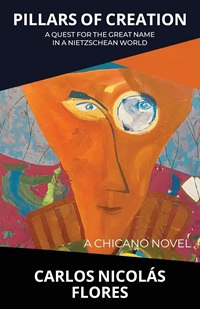
Pillars of Creation

Long Review
“Pillars of Creation” is a hallucinatory Chicano border novel that fuses family drama, political reality, and metaphysical dread into one long, disorienting trip. Set in Telaraña County—a “lost province” on the north bank of the Rio Grande—the book follows Yoltic Cortez, a 25-year-old Tejano caught between his dying father, his complicated love for his girlfriend Marfil, and his obsession with becoming a “great American author.” From the opening pages, where Yoltic floats above South Texas as a literal cloud while high on potent Tezca, the novel declares its intention: this is a story in which reality, memory, and vision are constantly dissolving into one another.

Yoltic’s circumstances are rooted in the concrete struggles of border life. He lives in Cuatro Vientos, a colonia with contaminated water and corrupt officials where residents still remember hauling water in plastic jugs before the failed plant at Los Espejos, and where a disgraced manager sits in jail while no one trusts the tap.  His father, a devout, self-educated former shoeshine man and ranch worker for “the Jew,” now lies in a nursing home after a stroke, while Yoltic wrestles with guilt over dropping out of college and “squandering” the sacrifices that paid for his education. Marfil, a Mexican woman with ranch skills, sharp intelligence, and a deep love for real Mexican cooking, is both anchor and mirror; she enjoys Tezca but worries about what it does to him and hears two battling voices inside him even when he sleeps. Around them, Border Patrol trucks cruise by, agents harass young women, and the threat of “la migra” haunts every cross-border errand, even for someone who “looks like a gringa” but is still treated as Mexican by U.S. authorities.

At the same time, the book is thick with ideas. The epigraphs from Dostoevsky and Kant signal a preoccupation with evil, moral law, and the unstable boundary between inner and outer worlds. Yoltic’s interior life runs on philosophy, stolen books, and a fascination with astronomy; he reads about star formation in the Milky Way in between washing dishes and worrying about his father’s health.  The figure of the “Failed Poet” and books like The Revolt of the Cockroach People introduce a discourse on Chicano identity, self-loathing, and the label “pocho”—a people seen as cockroaches by Anglos and tailless dogs by Mexicans.  Flores uses these references not as name-drops but as provocations; the modern borderlands are framed as a place where everyone is uprooted, where shame about origins becomes a spiritual disease, and where literature itself becomes both salvation and infection.

Stylistically, the novel is bold. It is told in an intimate second person—“you” are Yoltic—which immediately implicates the reader in his altered states and moral confusion. The prose leans into long, winding sentences and sensory excess: the texture of tortillas, the smell of beans and salsa, the feel of Marfil’s fingers circling a nipple, the terror of a mouse imagined as trying to escape through the urethra during a drug trip. Spanish is woven freely alongside English, with untranslated slang and curses—Tezca, rajón, papacito, pochos, la migra—that reinforce the authenticity of place and community. Code-switching here functions as an aesthetic and political choice; the text refuses to flatten its world for outsiders, inviting readers to work a little to inhabit the language of Telaraña County.

Thematically, the book ranges across faith, shame, masculinity, and the burden of legacy. Yoltic’s dead mother, a devout gardener who once kept the home full of flowers and food, returns as an imagined moral voice invoking the Fifth Commandment and warning that refusal to honor one’s origins breeds nothing but shame and suffering. His father retreats into religion, while Yoltic turns to philosophy, pot, and dreams of literary greatness. Between them stands a Devil’s mask from Oaxaca and a recurring sense that the borderlands are haunted—by ghosts, by history, by the “flood” of corruption and neglect that has already washed away much of what they loved. The novel’s later sections, as signaled by chapter titles about curses, demons, horror, and ghouls at Walmart, extend this haunted realism into full-blown allegory without abandoning the social realities of immigration, exploitation, and environmental harm.

“Pillars of Creation” will be especially rewarding for readers who appreciate dense, lyrical prose, bilingual narratives, and politically alert fiction that is unafraid of blending the surreal with the mundane. It is not an easy or casual read: there is frequent drug use, frank sexual imagery, heavy use of Spanish, and long discursive passages on literature and identity that may feel slow to plot-driven readers. Yet the payoff is substantial. The novel offers a vivid, often unsettling portrait of a young Chicano on the edge—of adulthood, of spiritual crisis, of political catastrophe—and uses his fractured consciousness to explore what it means to seek meaning, dignity, and art in a world that keeps insisting one is a cockroach, a pocho, or a sinner. For readers willing to live inside that tension, “Pillars of Creation” is a powerful and memorable work.


Short Review
“Pillars of Creation” is a fiercely lyrical Chicano border novel that plunges readers into the disoriented consciousness of Yoltic Cortez, a 25-year-old Tejano stalled between his dying father, his Mexican girlfriend Marfil, and his obsession with becoming a writer. Set in a polluted colonia in South Texas where Border Patrol trucks prowl the roads and everyone distrusts the water, the book braids everyday struggles—nursing homes, low-wage work, immigration fears—with hallucinations, ghosts, and demonic imagery fueled by potent Tezca.

Told in a daring second person and saturated with Spanish, philosophy, and literary references, the novel explores shame, self-loathing, and the complicated inheritance of being Chicano in a place that treats Mexicans as cockroaches and pochos as tailless dogs. Flores’s prose is lush, sensual, and often darkly funny, moving from erotic intimacy in a small kitchen to memories of a mother who preached the Fifth Commandment and kept the house alive with flowers and food.  The pacing can be slow and digressive, and the mix of Spanish slang, drug use, and philosophical musing will be demanding for some readers, but those who enjoy ambitious, politically sharp literary fiction will find a richly textured, haunting portrait of border life and spiritual crisis.


One-Sentence Review
A hallucinatory, bilingual Chicano border novel that blends family drama, political fury, and metaphysical dread into a dense, unforgettable portrait of a young Tejano writer haunted by history, shame, and the promise of creation.


Book Rating
📘📘📘📘 – Strongly Recommended: Ambitious, stylistically bold, and thematically rich, this novel offers a vivid, unsettling vision of border life and Chicano identity, even if its digressive structure and dense prose will best suit patient, literary-minded readers.


Pull Quotes (1–2)

  1. “A hallucinatory, bilingual border novel that turns one young Tejano’s drug-hazed, guilt-ridden consciousness into a powerful lens on family, faith, and Chicano identity.”
  2. “Flores fuses sensual detail, political reality, and metaphysical unease into a richly textured narrative that rewards readers who relish ambitious, idea-driven literary fiction.”


Content Notes

  • Language: Frequent strong language in English and Spanish, including curses and slurs used in a critical, contextual way.
  • Violence: Mostly implied or described in memory or discussion; presence of horror elements, demonic imagery, and intense situations but limited graphic physical violence on the page in the sampled portion.
  • Sexual Content: On-page, non-graphic but detailed sexual foreplay and nudity; sexual desire and bodies are described frankly and sensually.
  • Drugs/Alcohol: Recurrent marijuana use (Tezca) with on-page intoxication and hallucinations; references to other drug experiences and alcohol (“drunken beans”) as part of the setting.
  • Sensitive Topics: Parental illness and impending death, grief, poverty, environmental contamination of water supplies, religious shame, ethnic slurs and bigotry, immigration enforcement and fear of Border Patrol, internalized self-loathing around ethnicity.


ReadSafe Rating

  • Rating: R
  • Labels: EL, SC, DA, ST
  • Explanation: The novel contains frequent strong language in English and Spanish, frank depictions of drug use and intoxication, and on-page sexual content that, while not graphically pornographic, is explicit in its sensual detail.

It also engages directly with sensitive themes such as serious illness, death of a parent, ethnic slurs, systemic bigotry, and environmental harm.  While physical violence is not heavily emphasized in the sampled portion, the overall combination of explicit language, sexual content, drugs, and weighty topics places the book in R territory for most readers.

Top of Form

Bottom of Form


Written by admin on 30 November 2025. Posted in Uncategorised.

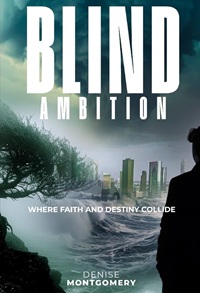
Blind Ambition: Jonathan’s Story

Long Review
Blind Ambition: Jonathan’s Story is a character-driven family drama that traces the slow burn of resentment, loyalty, and calculated risk inside a Texas ranching dynasty. Jonathan, long relegated to a loft above his Aunt Margie’s garage, has spent nine years trapped between obligation and humiliation—tolerating her cutting remarks, living off the scraps of his uncle’s unreliable generosity, and nursing a quiet conviction that life owes him more. When a hidden will and a shady land scheme surface, Jonathan sees, for the first time, a concrete path out of poverty and powerlessness. The novel follows how he decides to use what he knows, testing where ambition ends and integrity begins.

At the heart of the story is Jonathan himself, a young man caught between two equally corrosive influences: Margie’s bullying self-righteousness and Uncle Arthur’s weak-willed gambling and secrets. Jonathan’s internal monologue and reactions to their behavior form the spine of the book. His frustration over “nine years” wasted, his attachment to his battered car “Betty Blue,” and his fixation on the will all paint a portrait of someone whose dreams have been deferred so long they have hardened into something sharper. Around him, a supporting cast of men—Arthur, Walter, Harry, Ben—cycle in and out of the garage, card games, and backroom conversations, each embodying a different way of rationalizing compromise.

The central tension is not built around guns or chases but around leverage: who has it, who thinks they have it, and who is about to lose it. A clandestine meeting in the garage, with men debating whether to betray their families for a lucrative land sale, becomes one of the book’s key set pieces. Some back away, deciding the price—in marriages, legacies, and self-respect—is too high. Others double down, insisting that the payoff will erase the sins that got them into trouble. Watching Jonathan eavesdrop, calculate, and finally pick up the dropped letter that could change everything gives the story a slow, satisfying click of cause and effect rather than a single explosive twist.

Tone-wise, the book occupies a grounded middle space between inspirational fiction and domestic suspense. There are no graphic scenes, but there is plenty of emotional heat: Margie’s verbal abuse, Arthur’s flare-ups when cornered, Walter’s rage as he hurls a table at the wall. Thematically, the novel explores the long shadow of bad choices—gambling debts, emotional cruelty, staying too long in a toxic situation—and how one person’s attempt to break free can look dangerously like becoming the thing he despises. Questions of honor versus survival, loyalty to blood versus loyalty to self, and what “freedom” actually means echo through Jonathan’s decisions and through Uncle Arthur’s parallel escape.

Stylistically, the prose is straightforward and accessible, with a strong emphasis on dialogue and on Jonathan’s immediate reactions. Chapters tend to build around conversational confrontations and small, concrete actions—the way Margie throws Arthur’s belongings into the garage, the way Arthur and Walter circle each other over the card table, the way Jonathan studies the letter from the South Texas Planning Commission as if it were a key to another life. The pacing is measured rather than frantic, giving room for repeated arguments, simmering resentment, and the practical logistics of leaving: packing, finding tires, lining up an exit. Readers who enjoy immersing themselves in the social and emotional fabric of a small community, rather than racing through plot pyrotechnics, will find this rhythm appealing.

One of the novel’s chief strengths lies in its clear sense of place and social reality. The ranch, the loft, the garage-turned-game-room, the home that feels like a fortress under Margie’s control—all are rendered in a way that feels lived-in and specific. The economic precariousness of the characters—Arthur’s debts, Jonathan’s fragile savings, the allure of a land buyout that could finally deliver comfort—grounds the story in the real-world pressures faced by working- and middle-class families. The dialogue between the men around the card table, in particular, captures that mix of macho bravado, rationalization, and flickers of conscience that often precede a bad decision.

Some readers may find the villainy of Aunt Margie somewhat broad, bordering on archetypal, and the book leans into repeated scenes of her cutting remarks and controlling behavior. Likewise, readers looking for a high-octane thriller or a wider canvas of external danger may feel that the stakes are mostly emotional and financial rather than physical. Yet within its chosen scope—one young man’s fight to reclaim his life and future from the grip of a toxic relative and a compromised patriarch—the story delivers a coherent, emotionally satisfying arc.

Blind Ambition: Jonathan’s Story ultimately lands as a tale about how easily ethical lines blur when money, resentment, and long-standing grievances collide—and how costly it can be, in both directions, to step away from a family system built on secrets. Readers who appreciate contemporary, faith-tinged family drama with a focus on character evolution and moral tension are likely to find this novel rewarding.


Short Review
Blind Ambition: Jonathan’s Story focuses on a young man who has spent nearly a decade enduring his aunt’s emotional abuse and his uncle’s poor choices, only to discover a way out when a hidden will and a land deal come to light. Set largely on a Texas ranch and in the cramped spaces of a garage and upstairs loft, the book trades car chases for card tables and backroom schemes, building tension through conversations, secrets, and shifting alliances. Jonathan’s complicated feelings about his uncle, his loathing for Aunt Margie, and his gnawing fear that he has wasted his life make him a compelling focal point.

The novel’s strengths lie in its grounded sense of place, its clear depiction of generational dysfunction, and its exploration of how ambition can be both a survival tool and a moral hazard. Some characters, especially Aunt Margie, are drawn in broad strokes, and the pacing favors slow burn over breathless suspense, which may not suit readers seeking a conventional thriller. However, for those who enjoy character-driven stories about family betrayal, financial temptation, and the fight to claim a self-determined future, Blind Ambition offers a thoughtful, engaging read.


One-Sentence Review
A grounded, character-driven family drama, Blind Ambition: Jonathan’s Story follows a young man who turns long-buried secrets and a shady land scheme into his path out of emotional captivity and small-town stagnation.


Book Rating
📘📘📘📘 – Strongly Recommended: A well-crafted, emotionally engaging family drama with clear stakes and believable moral tension, especially appealing to readers who enjoy small-town, character-driven stories about ambition, betrayal, and hard-won freedom.


Pull Quotes (1–2)

  1. “A grounded, character-driven family drama, Blind Ambition turns card tables, land deals, and one toxic ranch household into a tense study of ambition, loyalty, and escape.”
  2. “Readers who enjoy small-town stories where the biggest battles are fought in garages, kitchens, and family emails will find Jonathan’s hard-won bid for freedom both satisfying and memorable.”


Content Notes

  • Language: Mild profanity and insults (e.g., “damn,” “hell,” and sharp verbal put-downs); no pervasive explicit language.
  • Violence: No graphic violence; some intense arguments, a table being thrown, and verbal threats, but no on-page physical harm.
  • Sexual Content: None on-page beyond general references to marriages and pregnancy; no explicit or detailed sexual scenes.
  • Drugs/Alcohol: References to gambling, financial desperation, and a close family member’s treatment for alcohol-related issues; no graphic depiction of substance abuse.
  • Sensitive Topics: Emotional and verbal abuse within a family, gambling addiction, financial fraud, and family estrangement are recurring themes.


ReadSafe Rating

  • Rating: PG-13
  • Labels: DA, ST
  • Explanation: The book contains sustained depictions of emotional abuse, marital breakdown, gambling-related financial crisis, and a close family member’s recovery from alcohol problems, which may be intense for younger readers. There is no graphic violence, no explicit sexual content, and only mild profanity, but the mature themes of addiction, manipulation, and betrayal justify a PG-13 rating. The DA label reflects recurring references to alcohol treatment and addictive behavior, while the ST label covers the emotional abuse, family conflict, and ethical dilemmas surrounding fraud and exploitation.

More Articles …

  1. Willowmena: Origins of Bleak
  2. Killer Art
  3. Texas Tainted Dreams
  4. Roll Back the Sun

Page 3 of 5

  • 1
  • 2
  • 3
  • 4
  • 5

Stay Informed of Specials & News

Follow us from one of the options below:
Newsletter
Facebook
Twitter
Instagram
© 2026 True Voice Review
  • Privacy Policy
  • Terms and Conditions
  • Home
  • Pages
    • About
    • Help
    • Contact
    • Pricing
    • 5 Book Review Winner Program
  • TVR Reviews
    • Book Ratings
      • 4 Book Rating
      • 3 Book Rating
    • Children's Books
      • Dear Ms. Guadalupe: Letters to My Librarian
      • Milo and the Big Big Feel
    • Fiction
      • Every Delay Means a Life
      • Love at the Eagle
      • The Bloom
      • The Signal Within
      • Twelve Palominos
      • Killer Art
      • Texas Tainted Dreams
      • Roll Back the Sun
      • Pillars of Creation
      • Blind Ambition: Jonathan’s Story
      • The Day They Named It
      • Story Book Mountain
      • Spirit Never Dies
      • God’s Army to Purge Homosexuality
      • Five Years of Cavalryman
      • The Acorn Stories
      • Before We Turn to Dust
      • Searching for a Stranger
      • Because this is Texas
      • Tatae's Promise
      • A Long Way Home
      • The Bone Witcher
      • Camping with a Killer
      • Hallowed Ground
      • BBQ Test: How to be American
    • Non-Fiction
      • Author’s Roadmap to Success
      • The Crazy Great Journey
      • The A to Z Book of Aging
      • Venomous Snakes of Texas
    • Short Story Anthologies
      • Divided We Fall
      • Echoes of Tomorrow
    • Middle School
      • Willowmena
    • YA Fiction
      • Gritty Girl
      • Broke Home, Healed Nest
      • Aspire